How to Dispose of Construction Debris Legally in Colorado
Updated October 2026
To dispose of construction debris legally in Colorado, you’ve got to route your materials through CDPHE-permitted facilities — that responsibility falls on you as the generator. Standard debris like wood, drywall, and metal can go into roll-off dumpsters, but only if they’re headed to licensed sites. Pre-1980 structures? Get them tested first — asbestos and lead paint require licensed abatement before anything else happens. Follow the right steps, and you stay within the rules. Keep going to learn exactly how.
What Colorado Law Says Construction Debris Is
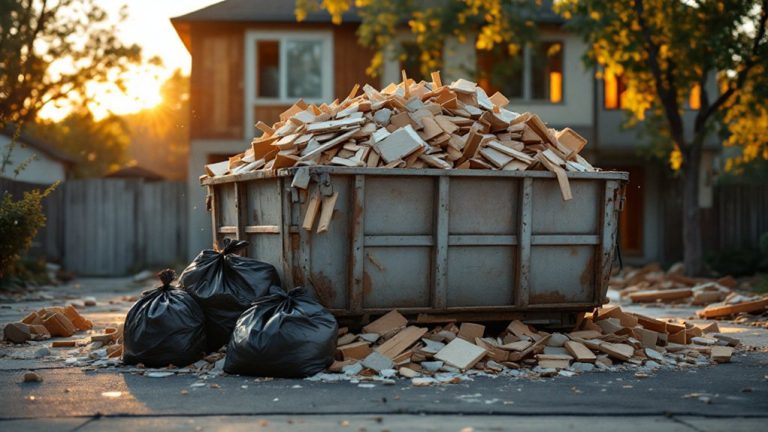
Colorado’s solid waste rules (6 CCR 1007-2) define construction and demolition debris as waste from construction, remodeling, repairs or demolition, including lumber, bricks, carpet, ceramics, sheetrock, metals, window glass and piping. All of that can legally go in a roll-off and on to a permitted landfill.
Two steps catch people off guard. First, every demolition requires a Demolition Notification Application to CDPHE, even if no asbestos is found, followed by a 10 working-day wait. Second, single-family remodels need a certified asbestos inspection before disturbing more than 32 square feet, 50 linear feet of pipe or a 55-gallon drum’s worth of suspect material.
Key Takeaways
- Colorado’s Solid Waste Act requires generators to deliver construction debris to licensed, CDPHE-compliant facilities to avoid potential fees and fines.
- Prohibited materials like asbestos, paint, and batteries cannot enter standard disposal streams and require specialized handling.
- Pre-1980 structures should be tested for hazardous materials; professional abatement is required before demolition begins.
- Using licensed roll-off haulers creates documented weight tickets and receipts, protecting contractors from future liability.
- Clean concrete goes in either size with no weight charge. Clean means concrete only, with no rebar, wire mesh, dirt or trash mixed in.
Colorado’s Regulatory Framework for Construction and Demolition Waste
When I first started dealing with construction waste in Colorado, I had no idea how strict the rules actually were. Colorado’s Solid Waste Act governs construction debris disposal colorado-wide, and it’s serious. You’re responsible for getting your materials to licensed facilities — no shortcuts. I learned that fast. Colorado c&d waste regulations put the burden directly on generators like us. Miss that, and you face potential fees and fines. Legal construction waste removal co requires using approved sites and keeping documentation. I wish someone had told me earlier — compliance isn’t optional here, it’s everything. Accepted materials like wood, drywall, and metal can go into roll-off dumpsters as long as they are routed to licensed facilities. Materials like asbestos, paint, and batteries are strictly prohibited from standard disposal and must be handled separately through approved channels.
Permitted vs. Non-Permitted Disposal Facilities
Once you understand Colorado’s regulatory framework, the next thing that’ll stop you cold is figuring out where you can actually take your debris. Not every landfill accepts all materials — that’s a hard lesson. Building material disposal laws require using CDPHE-compliant, permitted facilities. Here’s what that means for you:
- Permitted facilities meet strict state environmental standards
- Non-permitted sites create serious legal liability
- Knowing how to dispose of construction waste keeps you within the rules
- Finding a construction debris landfill CO residents trust matters enormously
TNR uses licensed, permitted facilities handling construction and demolition waste. Smart disposal starts with choosing the right partner. Their contractor waste management services are specifically designed to handle materials like concrete, lumber, drywall, metal, and roofing materials without causing waste-related delays on your jobsite. TNR serves homeowners and contractors within 20 miles of Castle Rock, making it a practical option for construction crews operating throughout Central Colorado.
Your dumpster. Delivered fast. No surprises on the bill.
Flat-rate pricing from $319. Same-day delivery is often possible across Douglas and Arapahoe Counties.
Book online in under 2 minutes — or call/text and we’ll handle the rest.
Thousands of Front Range homeowners and contractors have trusted TNR Waste Services because we show up when we say we will — and charge exactly what we quoted. Pick your size, choose your date, and get back to your project.
Takes less than 2 minutes. No Credit card required to reserve.
Special Categories: Asbestos, Lead Paint, and Other Hazmat
Here’s the truth nobody tells you until it’s too late — not every demo project is just dust and drywall. Pre-1980 buildings often hide asbestos, lead paint, and other hazardous materials inside walls, floors, and ceilings. You can’t just toss that stuff into a dumpster. Seriously, don’t. If testing finds these materials, Colorado law requires professional abatement before demolition work begins. Licensed contractors must remove and dispose of these materials separately — never mixed with standard debris. Skipping this step risks your health and can bring potential fees and fines. If your structure predates 1980, or the work will disturb more than 32 square feet of suspect material, get it tested first. That one step protects everyone. For materials that do qualify for dumpster disposal, clean concrete goes in either size with no weight charge. Clean means concrete only, with no rebar, wire mesh, dirt or trash mixed in. A concrete load with anything mixed in is a dirty load and carries a flat $200 fee. When planning your cleanout around probate court dates or estate deadlines, scheduling dumpster delivery early prevents last-minute scrambling and keeps your project legally compliant from start to finish.
How a Permitted Roll-Off Company Protects the Contractor
Hazmat is the part that keeps contractors up at night, and rightfully so. But here’s what changed everything for me—using a permitted roll-off company. They create a paper trail that protects you completely.
A licensed hauler gives you:
- Documented weight tickets proving legal disposal
- Receipts showing certified facility drop-offs
- Protection if regulators question material destinations
- A defensible record when liability surfaces later
That documentation isn’t boring paperwork. It’s your shield. When someone asks where your debris went, you’ve got answers. Licensed haulers track everything, so you don’t carry that risk alone anymore. Companies built on pricing transparency and accountability go further by providing upfront quotes with weight limits and potential additional charges explained clearly, so there are no surprises when the job is done. If you need direct guidance on debris removal for your specific project, reaching out through phone or email support connects you with a team that can walk you through compliant disposal options from the start.
Frequently Asked Questions
How Much Does It Cost to Get Rid of Construction Debris?
Landfills charge by weight, and rates vary by facility. Every TNR rental includes 3 tons. Recycling concrete or metal cuts costs substantially, and some jurisdictions charge refundable diversion deposits—so smart sorting saves you real money.
What Is the Most Wasteful State?
Wyoming tops the charts as the most wasteful state, with you seeing over 3,000–4,000+ pounds of MSW per person annually. Low population density and limited recycling infrastructure are driving that staggering waste output.
How to Dispose of Renovation Debris?
Check your permit’s diversion rules, then separate concrete, metal, wood, and cardboard on-site. You’ll need to document weight tickets, use licensed haulers, and upload receipts to your jurisdiction’s platform to stay compliant and eco-forward.
What Is Surprisingly Not Recyclable?
You’d be surprised—painted wood, carpet, insulation, composite materials, and contaminated drywall aren’t recyclable in standard C&D streams. They’ll trigger fees or require special handling, so always verify facility acceptance lists before assuming something’s reusable.
Conclusion
You’ve got everything you need to handle construction debris the right way in Colorado. Don’t let the rules intimidate you. Sort your materials, find a permitted facility, and document your loads carefully. If hazmat‘s involved, call a licensed pro immediately.
When it comes to taking the heavy lifting off your plate, TNR Waste Services makes it simple. Their dumpster rental services are built for contractors and homeowners who need a fast, dependable solution across Central Colorado’s Front Range. Fast, reliable dumpster rentals across Central Colorado’s Front Range: that’s not just a slogan, it’s how they operate on every job.
Do it right the first time and you’ll stay within the rules and avoid delays down the road. Ready to get started? TNR Waste Services has you covered — jump online and reserve your dumpster today, or pick up the phone and call or text to lock in your rental and get that debris hauled out the right way.